Cart 0

Upper School 

Academic rigor ensures our graduates are well prepared for college and the opportunities that await beyond the Red Doors.

 
us 20191108_Browning_0186.jpg
Relational and rigorous classroom learning complemented by dynamic extracurricular offerings, all within a high challenge and high support community, characterize Browning’s Upper School. Boys graduate fully prepared for college work, and our deeply committed faculty also help them develop their other talents and full selves as they prepare for lives beyond the Red Doors.
— Jon Willson, Head of the Upper School
 

Upper School Program Highlights

Explore some of the standout features of our Upper School experience.

Explore the Upper School Curriculum

Our boys are both academically challenged and emotionally nurtured to become their best selves by living our Browning values of curiosity, honesty, dignity, and purpose daily.


Academic Subjects


The English program has three core principles: that reading and writing are sources of wisdom and delight; that the individual can better understand his own story by seeking out the stories of others; that a boy must be able to express himself clearly and listen deeply.

Grade 9 Literature and Composition I: The Stories We Tell: Ancient World Literature and Modern Retellings

Grade 9 English focuses on how literature shapes and questions our understanding of the self, and it begins with war as a force that tests the boundaries of honor, loyalty, and fate. Starting with The Iliad, students explore how stories across time reflect societal values and challenge norms, and they examine works ranging from ancient epics to Enlightenment satire and modern retellings that grapple with the trauma of war, shifting notions of identity, and the idea of justice. The course also examines storytelling, tracing its evolution from ancient oral traditions to contemporary narratives that reimagine classic tales for modern audiences. Along the way, students write and present their autobiographical epics, applying what they have learned about narrative structure and voice. Through oral exams, collaborative projects, and writing workshops, students engage deeply with texts, and they defend their interpretations while sharpening their analytical skills, discovering how literature mirrors the world and raises important questions about it.

Grade 10 Literature and Composition II: Spectres of Identity

Grade 10 English students explore haunted homes and outsiders in literature. From Gothic classics to Shakespeare to contemporary novels in translation, each of our texts examines the anxiety and terror of confronting the world and existing as individuals. Students also read weekly selections that may include poetry, short fiction, and critical essays. Each writing assignment requires original thought; students will write essays and creative pieces of various lengths, from on-demand exercises to longer, take-home efforts that require processes of conferencing and editing.

Grade 11 American Literature and the Making of the American Self

This course will immerse Grade 11 students in diverse literary and artistic voices that continuously shape our American identity and experiences. Our readings will underscore those intimate connections between the history of reading and writing and American democracy, revealing that the study of American literature, to paraphrase historian Jill Lepore, is inherently intertwined with the study of American history. Our focus will therefore center on the shared stories of communities situated both at the center and periphery of their respective American moments. Taking an interdisciplinary approach, we will move from Christopher Columbus's journals and Indigenous accounts of First Contact to the religious, political, and philosophical writings of colonial and Revolutionary America, Civil War poetry, Transcendentalism, and the emergence of literary Modernism. Along the way, students will encounter canonical and lesser-known voices alike, including Native and African American writers, immigrant experiences, and Latin American perspectives that challenge and complicate traditional narratives of the nation, revealing the competing histories and cultural inheritances that have shaped the Americas.

Grade 12 English Courses

Cities of Destruction: The Literature After Total War

Taking the First World War and the emergence of total war as our point of departure, this course asks how writers respond when catastrophe becomes a defining condition of modern life. Drawing on Paul Saint-Amour's concept of pre-traumatic stress disorder, we will consider how literature registers disaster before it arrives and how the anticipation of destruction shapes the present. We will return throughout the semester to a central question: what can literature reveal when catastrophe corrupts the forms and signs available to bear witness to it?

Creative Writing

Through a study of different approaches to writing, students will better their understanding and enjoyment of contemporary literature. All enrolled students will be responsible for submitting several pieces of their own work to be read and discussed with their teacher and peers. In addition to adopting the workshop model for our course, we will explore critical perspectives on the short story as a genre. We will strive to meet three essential goals: (1) discover and appreciate some contemporary literary art, (2) build a small portfolio of creative work, and (3) find purpose and community in a workshop of peers. Course readings, in addition to the writing of classmates, will include selections of fiction, essays, and poetry.

Finding Home: The Literature of Exile and Belonging Finding Home is a course about belonging and exclusion and the ways in which identity is constructed both within and against the parameters of the dominant culture. Through a variety of texts, we will examine the geopolitical boundaries of “nationhood” and how these boundaries are adjudicated by those in power. We will use the postcolonial theories of Edward Said, Homi Bhaba, Frantz Fanon, and Gayatri Spivak to understand the complicated relationship between the colonizer and the colonized and the concepts of cultural authenticity and progress. We will begin with the works of Jamaica Kincaid, followed by Moshin Hamid’s novels The Reluctant Fundamentalist and Exit West, both of which explore how space and place shape our definitions of kinship and national affinity. This course will invite us to consider the ongoing struggle to form and sustain coherent individual and collective identities.

Introduction to Literary Theory This senior-level elective explores key schools of literary theory to enhance students’ understanding of how meaning is constructed in literature. Through theoretical lenses such as Structuralism, Psychoanalysis, Feminism, Marxism, Postcolonialism, and more, students will critically engage with texts, culminating in deep analytical readings of Shakespeare’s Hamlet. Students will develop critical thinking, writing, and discussion skills essential for college-level literary study. The study of literary theory begins by asking fundamental questions about what literature is, how it functions and interacts with the world around it.

Immigrant Cities and the Fear of the Foreign At the turn of the twentieth century, the arrival of millions of immigrants transformed American cities and challenged long-held ideas about belonging. John Dos Passos's Manhattan Transfer introduces us to a New York City being remade in real time and to a language struggling to keep pace with the lives passing through it. The Sacco and Vanzetti case emerges from this moment of uncertainty and stands at the center of the course, revealing how fear of the foreign shapes the way a society decides who belongs and who is believed. Reading historical accounts alongside the letters written by the two men themselves, we will also consider what it means to come into a new language and to use that language to make one's experience legible to others. Aleksandar Hemon's The Lazarus Project rethinks these issues through the story of a young Eastern European immigrant whose death became a symbol of a larger anxiety in early twentieth-century Chicago. As Hemon reconstructs one immigrant's life, he reflects on his own experience fleeing war-torn Bosnia in the 1990s and on the challenges of making a home in a new world. Together, these works ask what it means to translate oneself into an unfamiliar place and what happens when difference turns into fear and loathing.

Introduction to Narrative Film Introduction to Narrative Film is a semester-long course that broadens the skills that you have been acquiring in your English courses throughout high school: critical reading and critical writing, vocabulary development, and literary analysis. Our two primary goals in this class will be to learn how to “read” films critically, with attention to both content and form, and to write meaningful and sophisticated responses to those films. This process requires you to widen your critical vocabulary to include a “grammar of film”: the terms unique to film study and analysis. To accomplish our goals, we will explore a variety of film genres, including Drama, Westerns, Science Fiction, Film Noir, and Crime Films. We will begin with a brief history of film, which traces the transition from photography to movies and from silent movies to the “talkies” in the 1920s. We will also examine the international aesthetic and political movements that have shaped films across cultures and over time, such as Expressionism, Neorealism, and New Wave Cinema.

Legibility, Literature, and Power This course examines how interpretation shapes our understanding of reality and the ways we negotiate both personal and public identity. We trace how power extends beyond the law, concealed in systems of classification and organization that culminate in sanctioned control. Such “legibility” projects maximize visibility while producing compliant subjects (or “docile bodies”) who abandon individual will and morality in submission to the state’s will. Literature is one way we can unsettle this effort and reveal its contradictions while offering paths of resistance or alternative visions of authority. At the center of this course lies the question of how literature and cultural production shape identity while confronting the stories that states and institutions tell about us, or the ways they choose to remember us. Readings and screenings move across genres and forms, allowing us to trace how narrative preserves memory or distorts it, resists authority or re-creates spaces of freedom in the shadow of power.

The Master and Margarita: How to Deal with the Devil

This course will provide the context and support you need to enjoy The Master and Margarita by Mikhail Bulgakov—the much-loved novel about the devil’s mischief in Soviet-era Russia. Along with the translation of our primary text of study, we will read Bulgakov’s other works, study his biography and history amidst the Bolshevik revolution, and review other literary references key to understanding the novel. Coursework will include essential reading assignments, short critical essays, and an end-of-semester final project.

Weird Sisters and Conjure Women: Witches in Literature This course will examine historical and literary representations of witches and witchcraft in comparative works of literature, film, and television. We will look to different historical periods and literary contexts to answer the central question: “Who (or what) is ‘a witch’ at various times in history?” We will begin our study of witches in literature with the archetypal image of the “evil witch” in fairy tales. We will also examine how children’s stories and popular culture have constructed the witch as a representation of female “monstrosity”: the old hag, the vengeful stepmother, the cannibalistic threat to purity and innocence. We will then examine the infamous Salem Witch Trials of 1692, as depicted in Arthur Miller’s The Crucible, and the impact of this historical event on the politics of colonial America. We will draw comparisons to the past and the present to identify who and what have been positioned as a threat to cultural and social values and norms.

The history program is designed to provide students with the skills needed to meet the challenges of the most rigorous college education. Emphasis is placed on the development of comprehension and communication skills and facility with handling primary and secondary source evidence. Students master the craft of essay writing. Research techniques are stressed, in particular library skills and the judicious and careful use of the Internet as well as the use of proper bibliographic citations.

Grade 9 The Foundations of World History

This course begins a two-year sequence where students are exposed to World History from its origins to the present. Taking a thematic approach, the course explores major themes in human history that familiarizes students with both the broad patterns and rich diversity that define human civilizations. Themes studied include: world religions, government and empire, global connections, and challenging the status quo. While the content covered is essential, the development of skills is stressed. Students learn key reading and study habits, develop as writers and researchers and presenters, and take the steps to becoming increasingly independent learners. Finally, students interact with a variety of primary and secondary sources as they refine their ability to understand the point of view and perspective of key texts.

Grade 10 The Modern World

This course, which continues where Foundations of World History left off, will examine the political, economic, social, and cultural history of the modern world from the mid-eighteenth century through the beginning of the twenty-first century. Throughout the course, students will investigate the major historical themes, trends, and events that shaped Europe, Asia, Africa, and Latin America. The students will take on the role of historians as they critically read and analyze historical documents in order to come up with their own interpretations of historical events. The course also places a great deal of emphasis on the writing, researching, and presentation process, including crafting thesis statements, developing arguments, evaluating sources, integrating and analyzing evidence, as well as editing and revising. Major topics will include: Atlantic Revolutions; the Industrial Revolution; the “-isms” of the nineteenth century; New Imperialism; World War I, the Interwar Period, and World War II; decolonization; the Cold War; and the emergence of a globalized world.

Grade 11 United States History

This course will cover American history from European colonization to the early 21st century. Throughout the course, students will consider the roles that politics, economics, culture, and identity have played in the history of the United States. They will utilize primary and secondary sources to investigate key issues and themes, such as cultural exchange, servitude and slavery, race and ethnicity, partisan politics, the role of government, rights and liberties, women and gender, and economic inequality. Students will continue to hone their writing, presentation, and research skills. Major topics will include: English colonization; the Transatlantic slave trade; the American Revolution; the U.S. Constitution; the first party system; the Market Revolution; Jacksonian Democracy; moral reform movements; the Civil War and Reconstruction; the Gilded Age and Progressive Era; World War I; the Roaring 20s; the Great Depression; World War II; the Cold War; the Post-War Era; and contemporary politics.

Grade 11 Advanced United States History

The Advanced section of this course surveys the major political, economic, social and cultural developments in American history from the mid-18th century to the early 21st century. The course is designed to provide students with the analytical skills and factual knowledge necessary to deal critically with the challenges of United States history. Students learn to assess primary sources – their relevance to a given interpretive problem, their reliability and their importance – and to weigh the evidence and interpretations presented in historical scholarship. Nightly homework and class activities emphasize framing a response to a prompt, synthesizing information from the textbook and primary sources, and comparing devlopments across time periods. Students also practice the various types of questions featured on the Advanced Placement examination.

Grades 11-12 Introduction to Western Philosophy

Introduction to Western Philosophy is designed to introduce students to the practice of philosophy through the study of central philosophical questions and arguments, as represented by a selection of historical and/or contemporary texts. No previous study of philosophy is required. Students will be encouraged to join the ongoing philosophical conversation about the nature of being, understanding, and value.

Grades 11-12 History of New York City

Why did New York City emerge as the United States’ premier city and global capital? Who held power in the city during its tumultuous rise? And who suffered injustice from a want of power? We explore NYC’s history as a colonial port, industrial center, immigrant destination, and Progressive think tank. We chronicle New York’s sprawling 20th century transformation: the parks, bridges, highways, suburbs, skyscrapers, and housing towers that modernized the city; the new divisions of race and class that grew alongside the city’s infrastructure; and the artistic impulses of the modern metropolis, from music to the visual arts. We conclude with a look at Gotham’s 21st century challenges: immigration, good governance, income inequality, gentrification, and climate change. The course develops the reading, research, and writing skills required for college study.

Grade 12 European History

European History is a rigorous college preparatory course covering major political, economic, social, and intellectual developments in European history from roughly 1450 to the present. This course is the formal preparation for the Advanced Placement exam. The great breadth of content of this course necessitates considerable reading beyond the confines of the classroom. A significant interest in history itself is a prerequisite for success. Heavy emphasis in the course is placed on essay writing under time constraints.

The mathematics program is rooted in real-world problem solving, critical thinking, explorations of why theorems hold true in a given system, and the appreciation of mathematics as a language. Inquiry-based approaches to learning mathematical concepts are emphasized throughout each course leading to a deep understanding of the material.

Grade 9

Geometry

This is a standard course in Euclidean geometry covering the following topics: parallelism and perpendicularity, triangle properties and congruence, quadrilaterals, similarity, right triangles (including right-triangle trigonometry), circles, and areas and volumes. Proofs are introduced and used to discover why various theorems hold true. Coordinate geometry is integrated into all concepts. Algebraic problem-solving skills are emphasized throughout the course.

Accelerated Geometry

This course covers the same topics as the standard Geometry course but delves more deeply into the concepts, allowing for more challenging problem sets.

Grade 10

Algebra II

In Algebra II, linear, quadratic (with complex numbers), radical, polynomial, rational, exponential and logarithmic functions are explored in great detail. Systems (both linear and nonlinear). Real-world applications receive considerable attention within each topic. Graphing calculators (TI-84 Plus) and Desmos are used frequently as learning tools to supplement analyses of various concepts.

Accelerated Algebra II

In Accelerated Algebra II, linear, quadratic (with complex numbers), radical, polynomial, rational, exponential, and logarithmic functions are explored in great detail. Systems of both linear and nonlinear, matrices, and an introduction to trigonometry, including the unit circle, basic identities, and oblique triangles are also among topics studied. Real-world applications receive considerable attention within each topic. Graphing calculators (TI-84 Plus) and Desmos are used frequently as learning tools to supplement analyses of various concepts.

Grade 11

Algebra III with Financial Applications

What does algebra have to do with your life? As it turns out — everything. This course answers the question students have asked for years: "When am I ever going to use this?" Students will explore topics including income, banking, credit, home and car ownership, entrepreneurship, and insurance—building both algebraic reasoning and genuine financial literacy. These topics will be explored through the use of linear, quadratic, and exponential and logarithmic functions as well as the fundamentals of statistics. Learning is assessed through traditional tests and quizzes alongside hands-on projects that challenge students to apply math to real financial decisions — from budgeting for a first apartment to calculating the true cost of a car loan.

Precalculus

The start of Precalculus offers in-depth analyses of quadratic, polynomial, rational, exponential and logarithmic functions. A significant portion of the academic year then explores trigonometric functions, including graphical, analytical, and triangle-based representations. Sequences, series, matrices, combinatorial mathematics and probability are among additional concepts studied. Extensive applications to real-world phenomena are covered within each topic of study. Graphing calculators (TI-84 Plus) and Desmos are used frequently as learning tools to supplement analyses of various concepts.

Accelerated Precalculus

Accelerated Precalculus involves a rigorous study of trigonometric functions (both graphical and analytical), polar and parametrically-defined functions, vectors, conic sections, exponential and logarithmic functions, sequences, series, limits (including the limit definition of the derivative), combinatorial mathematics and probability. Extensive applications to real-world phenomena are covered within each topic of study. Graphing calculators (TI-84 Plus) and Desmos are used frequently as learning tools to supplement analyses of various concepts.

Advanced Statistics (AP Level) Data is everywhere—in the polls that shape elections, the algorithms curating your social media feed, and the trials determining which medicines reach patients. Statistics teaches you to think like the analysts who make sense of it all. Using a project-based framework, this course goes beyond formulas. Students investigate real questions, collect genuine data, and draw conclusions they can defend. The curriculum moves through exploratory data analysis, acquisition of good data, probability, inference, and modeling—building each concept on the last and employing technology to analyze data and draw conclusions from it. Projects sit at the heart of the experience. Students design studies, identify bias, and wrestle with the messiness of real-world data, developing not just the ability to run a statistical test but also the judgment to know when to trust one.

The Mathematics of Investment

What kind of mathematics is essential for understanding financial applications? The Mathematics of Investment will build the foundational knowledge necessary in areas like probability, basic statistics and functions–-especially exponential and logarithmic functions. With this foundation, students can begin to apply math to concepts such as the time-value of money, loans and interest rates, mortgages, stocks and bonds, insurance, risk, and financial planning. By connecting with Bloomberg for Education and other financial institutions in New York City, students will witness what they are learning in practice. Extensive use of models, simulations, and projects and presentations will allow students to become practitioners of finance and share their understanding of their areas of interest.

Grade 12

Calculus

After a very brief review of some of the main ideas and function concepts studied in Algebra II and Precalculus, Calculus delves into a detailed investigation of limits (including the limit definition of the derivative), rules for finding derivatives, and then applications of differentiation for curve sketching, optimization, and related rates. The course then explores the meaning of integration, some techniques for evaluating integrals, and then applications of integrals to areas, volumes, average value elementary and separable differential equations, and motion. Real-world applications of differentiation and integration, such as those from business and various sciences, are emphasized throughout the course. Graphing calculators (TI-84 Plus) and Desmos are used frequently as learning tools to supplement analyses of various concepts.

Advanced Calculus / AB AP Level

Calculus AB is a first-year college-level course in differential and integral calculus that covers all of the Advanced Placement AB level curriculum, as well as some Calculus topics not part of AB. Limits are investigated, leading to a study of differentiation and integration. Application problems from physics, engineering, business and economics are essential parts of the course. Graphing calculators (TI-84 Plus) and Desmos are used frequently as learning tools to supplement analyses of various concepts. In addition to having the option of taking the AB exam, students enrolled in this course may choose to complete a seminar meeting twice per week exploring those concepts unique to the BC curriculum. See the course description below for further details.

**Calculus BC Seminar **

This is a full-year elective course that meets twice per week for those Calculus AB students who plan to take the Advanced Placement Calculus BC exam. The course follows topics unique to the Advanced Placement BC level curriculum and requires rigorous independent study outside of class meetings.

Data Science

Data Science is an introductory college-level course where students learn to understand, ask questions of, and represent data through project-based units. The units will give students opportunities to explore data through developing their understanding of data analysis, sampling, correlation/causation, bias and uncertainty, modeling, data-based arguments, and data in society. At the end of the course, students will have a portfolio of their data science work that showcases their newly developed knowledge and understanding. The course provides students with opportunities to understand the data science process of asking questions, gathering and organizing data, modeling, analyzing and synthesizing, and communicating. Students will work through this process in a variety of contexts. Students learn through making sense of complex problems, then through an iterative process of formulation and reformulation coming to a reasoned argument for the choices they make. Adv. Computer Science Principles or Adv. Computer Science A is a prerequisite for this course.

Statistics of Sports

In the 21st century, data is everywhere, and now we have the technology available to crunch large sets of numbers, analyze them, and make predictions about the world that we live in. In this course, sports will serve as the setting through which we learn the statistical process and use it to answer questions like: Is there a home field advantage in the NFL? Has the designated hitter increased offense in Major League Baseball? Does the “hot hand” exist in professional sports? Can polyurethane suits make you swim faster? How can we build the best baseball team? You’ll even have the opportunity to formulate and investigate questions of your own area of interests. Projects and presentations will allow you to share your findings.

The Mathematics of Investment

What kind of mathematics is essential for understanding financial applications? The Mathematics of Investment will build the foundational knowledge necessary in areas like probability, basic statistics and functions–-especially exponential and logarithmic functions. With this foundation, students can begin to apply math to concepts such as the time-value of money, loans and interest rates, mortgages, stocks and bonds, insurance, risk, and financial planning. By connecting with Bloomberg for Education and other financial institutions in New York City, students will witness what they are learning in practice. Extensive use of models, simulations, and projects and presentations will allow students to become practitioners of finance and share their understanding of their areas of interest.

Advanced Statistics (AP Level) Data is everywhere—in the polls that shape elections, the algorithms curating your social media feed, and the trials determining which medicines reach patients. Statistics teaches you to think like the analysts who make sense of it all. Using a project-based framework, this course goes beyond formulas. Students investigate real questions, collect genuine data, and draw conclusions they can defend. The curriculum moves through exploratory data analysis, acquisition of good data, probability, inference, and modeling—building each concept on the last and employing technology to analyze data and draw conclusions from it. Projects sit at the heart of the experience. Students design studies, identify bias, and wrestle with the messiness of real-world data, developing not just the ability to run a statistical test but also the judgment to know when to trust one.

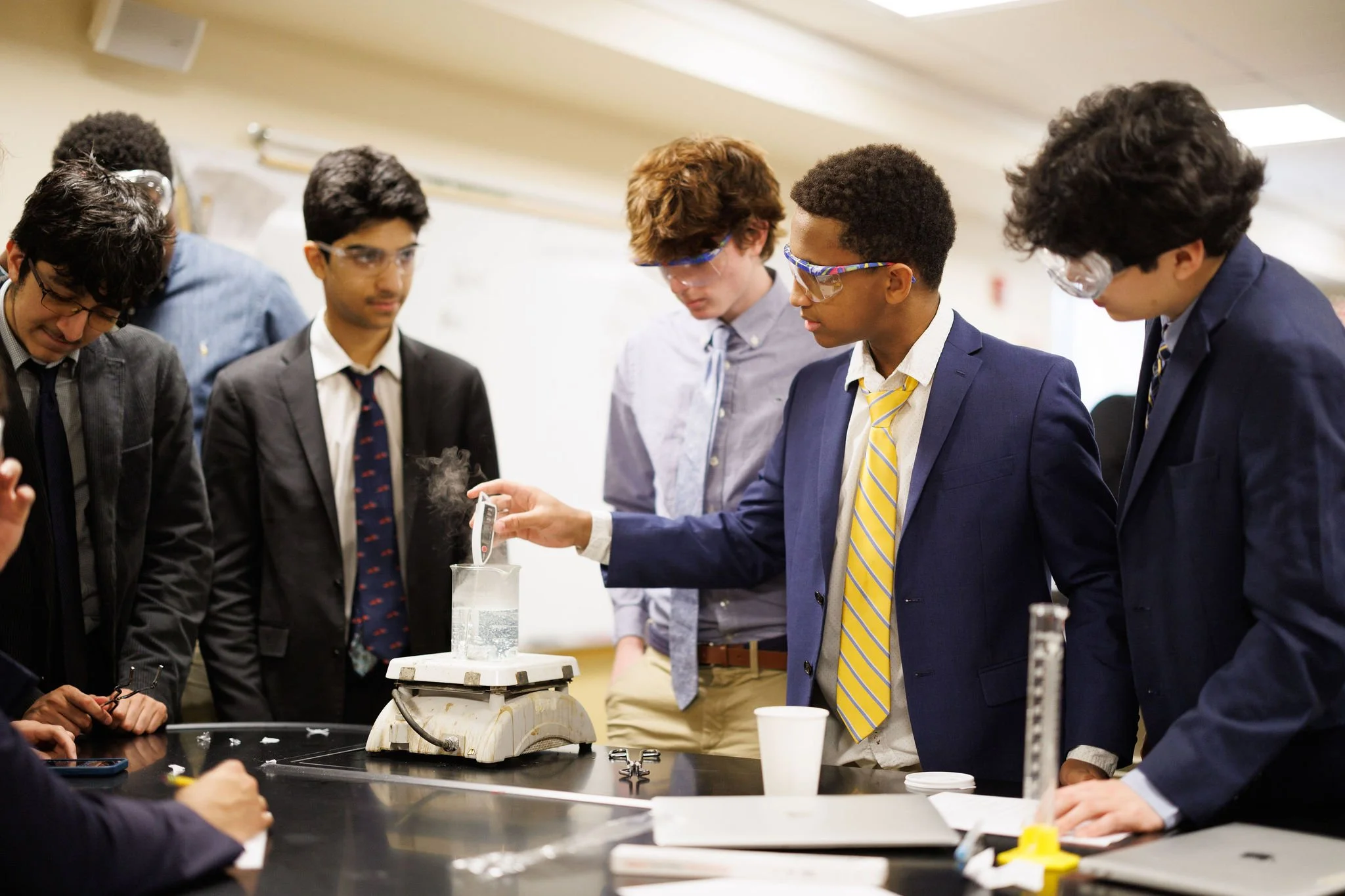
A minimum of three years of science are required in Upper School, and the science department encourages all students to take at least one biology, chemistry, and physics course. Laboratory and field-based investigations continue to be at the core of the learning experience. Data analysis skills are expanded from the use of descriptive or inferential statistics. Practical applications of science, such as environmental sustainability, bioethics, engineering projects are explored in every course.

Grade 9 Integrated Science

Integrated Science 9 is a multidisciplinary course that traces the narrative of the natural world from the birth of the solar system to the complex evolutionary and physical mechanics of modern life. By blending Earth Science, Chemistry, Physics, and Biology, students transition from studying atomic structures and chemical bonding to exploring cellular energy processes, such as photosynthesis and respiration, before examining the physical laws of motion and thermodynamics. The curriculum emphasizes the interconnectedness of systems, highlighting how geologic history and plate tectonics shape biodiversity and how human activity drives contemporary climate change. Through hands-on inquiry, including the Billion Oysters Project and the Marine Ecology Research Project, students develop the quantitative and analytical skills necessary to decode the physical world and understand the delicate balance of life on Earth. The fieldwork component of this class consists of a learning abroad trip to the Island School in the Bahamas at the end of the school year where students will employ field investigative tools to study marine tropical ecology and sustainability. Students are required to produce a research report and a presentation on their findings from the Island School trip.

Grade 10 Chemistry

This required Grade 10 science course provides a robust foundation for the subsequent Advanced Chemistry course. Concepts explored include atomic structure and bonding, properties of matter, stoichiometry, solutions and solubility, gas laws, acids and bases, and electrochemical reactions. Algebraic problem-solving skills are integrated throughout the course, particularly in the second semester. The laboratory portion of this course is focused on the hands-on application of the topics covered in class. Students will produce a full-length laboratory report in the second semester that will require independent research and critical thinking.

Grade 11 Classical Physics

This required Grade 11 course is taken as the third laboratory science course. This is a classical physics course where students explore the concepts of energy, mechanics, laws of dynamics, momentum and impulse, rotational motion, and gravitation. The course provides both conceptual and mathematical foundations for the Advanced Physics course, using algebra and trigonometry on a regular basis. A strong experimental component weaves through the entire course, through both hands-on labs and simulations.

Grade 11 or 12 Advanced Biology

Advanced Biology is an introductory college-level biology course. Students cultivate their understanding of biology through inquiry-based investigations as they explore the following topics: biochemistry, cell biology, energetics, cell communication, genetics, molecular biology, evolution, and ecology. The course follows the curriculum outlined by the College Board for AP Biology, providing an in-depth understanding of key concepts, principles and methodologies in biology. About 20% of the instructional time will be spent in hands-on laboratory work, with an emphasis on inquiry-based investigations that provide students the opportunities to apply the science practices. A great amount of time will be spent on developing inquiry and reasoning skills, such as designing a plan for collecting data, analyzing data, applying mathematical routines, and justifying arguments using evidence.

Grades 11 or 12 Advanced Environmental Science

Advanced Environmental Science is an interdisciplinary course that examines Earth's environmental systems through the lens of climate change, the defining scientific challenge of the 21st century. Building upon foundational concepts from biology, chemistry, and physics, students investigate how matter, energy, and life interact across interconnected natural and human systems, from the molecular scale to the planetary scale. The course emphasizes systems thinking and quantitative analysis as students explore the scientific principles that govern Earth's atmosphere, oceans, biosphere, geosphere, and human societies. Climate change serves as the central framework through which students analyze topics such as global energy balance, biogeochemical cycles, ecosystem dynamics, biodiversity loss, atmospheric chemistry, renewable energy technologies, water resources, food systems, land-use change, and environmental policy. Through case studies, data analysis, scientific literature, and problem-solving investigations, students will explore the dynamic relationship between human activities and environmental systems, examining challenges such as climate change, biodiversity loss, resource depletion, pollution, and sustainable development through an integrated, systems-level perspective. Drawing on themes found in university-level and AP Environmental Science curricula, students will evaluate real-world data, construct and interpret models, assess scientific evidence, and examine the complex feedbacks that connect human activities to environmental change. Particular attention is given to understanding how physical, chemical, biological, economic, and social processes interact to shape environmental outcomes.

Grades 11 or 12 Advanced Environmental Science

Advanced Environmental Science is an introductory college-level environmental science course. Students cultivate their understanding of environmental science through inquiry-based investigations as they explore the following topics: ecosystem, population, earth systems and resources, and pollution. The course follows the curriculum outlined by the College Board for AP Environmental Science, providing an in-depth understanding of key concepts, principles and methodologies in environmental science. At least 20% of the instructional time will be spent in hands-on laboratory work, with an emphasis on inquiry-based investigations that provide students the opportunities to apply the science practices. A great amount of time will be spent on developing inquiry and reasoning skills, such as designing a plan for collecting data, analyzing data, applying mathematical routines, and justifying arguments using evidence.

Grade 11 or 12 Advanced Chemistry

The pace and content level of this advanced course is comparable to college-level General Chemistry 1 and 2, thus the course extends the conceptual and mathematical foundations provided in the 10th grade Chemistry course. Advanced chemistry presents more sophisticated analytical laboratory methods as well as delves more deeply into atomic theory, chemical and molecular bonding, states of matter, chemical reactions, thermodynamics, and acid/base chemistry. The course follows the curriculum outlined by the College Board for AP Chemistry and, at the culmination of this course, students should be prepared to take the AP Chemistry exam.

Grade 11 or 12 Human Anatomy and Physiology

This is an interdisciplinary course that bridges biology, chemistry, and health sciences to explore the structure and function of the human body. Students will investigate major organ systems and physiological processes while integrating principles of biochemistry and medical technology. Emphasis will be placed on the use of scientific equipment such as endoscopes, ECGs, and imaging technologies to measure and analyze human biological functions. Through hands-on labs, dissections, case studies, and medical applications, students will develop a comprehensive understanding of how the human body maintains homeostasis and responds to external and internal stimuli. This course will meet regularly for one semester. This course is ideal for students interested in pursuing careers in medicine, biomedical engineering, sports science, or healthcare.

Grade 11 or 12 Neuroscience and Psychology

Drawing on contemporary research in psychology, neuroscience, and cognitive science, students will investigate how experiences physically reshape the brain. The course explores how memories are encoded and stored, how individual differences emerge, and how complex interactions among genes, environment, and experience contribute to personality, behavior, and mental functioning. Particular attention is given to the neuroscience of stress, anxiety, depression, personality disorders, trauma, drug addiction, and other psychological conditions. Students will have the opportunity to propose additional topics of interest, allowing the class to explore emerging questions and areas of neuroscience that are most relevant and engaging to the students, while emphasizing both the underlying neural mechanisms and their real-world implications. Students will also examine how advances in neuroscience are transforming our understanding of mental illness, human identity, ethical decision-making, and the future of medicine. The course challenges students to connect discoveries in the laboratory to broader questions about behavior, health, society, and what it means to be human.

Grades 12 Advanced Physics I

This Grade 12 course is equivalent to the first semester of an introductory college-level course on algebra-based physics, covering the topics of classical mechanics; work, energy, and power; momentum and impulse; rotational motion and gravitation; and fluid mechanics – extending the breadth and depth of knowledge acquired in the 11th Grade Classical Physics course. The course follows the curriculum outlined by the College Board for AP Physics 1 and, at the culmination of this course, students should be prepared to take the AP Physics 1 exam. Students interested in taking the class will be expected to have maintained at least an A- average in 11th Grade Math and at least an A- in the Classical Physics course.

Grades 12 Advanced Physics C: Electricity and Magnetism

This Advanced Physics course is a companion course to the Advanced Physics 1 course. The Electricity and Magnetism course explores concepts such as electrostatics, conductors, capacitors and dielectrics, electric circuits, magnetic fields, and electromagnetism. Students will complete hands-on laboratory work to investigate phenomena while using calculus to solve problems. The course follows the curriculum outlined by the College Board for AP Physics C: Electricity and Magnetism, and at the culmination of this course, students should be prepared to take the AP Physics C exam. Students interested in taking this class should have already taken Advanced Physics 1 and either Calculus AB or Calculus BC (concurrent enrollment in one of these is also possible). Students must also obtain the recommendation of the Browning Science Department to take this course.

Grade 12 Research in Molecular Genetics using Fruit Flies

Research in Molecular Genetics is a rigorous, lab-based research course where students engineer and map novel genetic lines of Drosophila melanogaster, providing a hands-on technical counterpart to the Research Practicum course. In this course, students will use, manipulate, and dissect living organisms of fruit flies, execute advanced molecular techniques, including Inverse PCR (iPCR), Sanger sequencing, and bioinformatic genome mapping, as well as carry out immunohistochemistry to visualize protein expression. The course concludes with the opportunity to present original findings at the annual Stan-X Conference-East at The Lawrenceville School, where students join a global network of student researchers to share their peer-reviewed data. By the end of the course, students will emerge with a professional-grade portfolio in biotechnology and a fully realized independent research project in molecular genetics.

Upper School students are required to study one world language through 11th grade. In Grade 9, students may continue their study of Latin, French, or Spanish or begin anew with Mandarin or Latin. Language courses are available through 12th grade, including some at the Advanced Placement level. Browning World Language classes are conducted in accordance with the best practices in language acquisition pedagogy.

The goal of the program is to assist each student in recognizing and eventually capitalizing on the many options available to him and to empower him in the college admissions process. Boys learn how to evaluate accurately their own achievements and aspirations; how to prepare for standardized testing; how to gather specific information about a variety of colleges and universities; how to organize the paperwork associated with college applications; and, most importantly, how to make informed and rational choices about their futures.

Grade 9

Latin I

Upper School students new to Latin dive into the language in a comprehensible immersion classroom, which develops all four language arts (listening, reading, speaking, writing). An understanding of ancient Roman culture and how it has shaped modern life is gained alongside proficiency in language arts. Texts include Hans Ørberg’s Lingua Latina Per Se Illustrata: Familia Romana.

Latin II

Students in Latin II continue to acquire vocabulary, grammar, and syntax. We repeatedly practice verb tenses and noun cases, as well as elements of advanced grammar as they occur in our reading. Texts include Hans Ørberg’s Lingua Latina Per Se Illustrata: Familia Romana. Emphasis is placed on developing reading skills.

French II

This course builds on previous work in French and continues to emphasize the oral tradition as well as the acquisition of vocabulary, expressions and the fundamental principles of grammar. Vocabulary is drawn from a variety of sources, including short stories, songs and texts related to culture and history. The major verb tenses/moods are covered with particular emphasis on the forms and uses of the imparfait and the passé composé. Students also learn how to build more complex sentences through the study of object and relative pronouns. Students will go beyond the classroom to explore the city to further their study and research on various cultures of the French-speaking world and explore the target language for personal enjoyment and career possibilities. Each semester, a major project connects literature, history, and cinema to promote cultural awareness and diversity. Textbook: D’accord II + Supersite

Mandarin

Mandarin I is designed to provide students with a solid foundation in one of the world's most widely spoken languages. Throughout the course, students will learn essential Mandarin Chinese vocabulary, grammar structures, and pronunciation techniques. Emphasis will be placed on developing the four key language skills: listening, speaking, reading, and writing. Cultural components will be integrated into the curriculum, allowing students to explore various aspects of Chinese culture, including traditions, customs, holidays, and daily life. By understanding the cultural context in which the language is used, students will deepen their appreciation and understanding of Mandarin Chinese. By the end of the course, students will be equipped with the fundamental language skills necessary to engage in basic conversations, comprehend simple texts, and write basic sentences in Mandarin Chinese.

Spanish II

This course builds on previous work in Spanish and continues to emphasize the oral tradition as well as the acquisition of vocabulary, expressions and the fundamental principles of grammar. Vocabulary is drawn from a variety of sources, including short stories, songs and texts related to culture and history. The major verb tenses/moods are covered with particular emphasis on the forms and uses of the imperfect and the preterite tense. Students also learn how to build more complex sentences through the study of object and relative pronouns. Additionally, students will go beyond the classroom to explore the target language for personal enjoyment and career possibilities. Students will visit the Museum of Natural History to further their study and research on indigenous cultures of the Spanish-speaking world. Each semester, a major project connects literature, history, and cinema to promote cultural awareness and diversity.

Grade 10

Latin III

Students in Latin III make the transition to the reading of unadapted Latin texts with vocabulary, annotated commentary, or other forms of scaffolding. The goal of the first semester is to ensure that the students have as much reading practice as their growing skills will allow: they read from and comment on stories that steadily meet their growing understanding of the language by challenging them in terms of complexity of the language. The reading is supplemented by the study of grammar and the underlying patterns that help to enable critical knowledge of texts and the ideas contained therein. In the second semester, students begin to read adapted ancient texts to make the transition to ancient literature as successful as possible. Texts include Hans Ørberg’s Lingua Latina Per Se Illustrata: Familia Romana and Roma Aeterna.

French III

French III students are expected to gain an understanding of intermediate French grammar and verb tense structures. Emphasis is also placed on vocabulary enrichment and increased cultural awareness. Students are asked to write frequently in French, and once in English in a two- to three-page report on French history. Students are expected to master basic written French. Information on the various cultures of the French-speaking world, famous people of French descent and relevant movies are interwoven throughout the course. Textbook: D’accord III + Supersite

Spanish III

This course is designed to introduce intermediate-level students to the rich and exciting literature of the Hispanic world. This course aims to instill in students a love of modern Hispanic literature while aiding them in their desire for self-expression by learning grammar in context through reading short stories, poems, and plays. They are expected at this level to have the necessary skills that allow them to contribute with some degree of fluency to class discussions on a variety of topics. A range of well-known authors is selected for this course to enrich students’ knowledge of the great literature and renowned Hispanic literary figures such as Sandra Cisneros, Julia Alvarez, Gabriel Garcia Marquez, Ricardo Palma, Federico García Lorca, Octavio Paz, and Laura Esquivel. Textbook: Descubre III + Supersite Textbook: Descubre III + Supersite

Grade 10: Mandarin II Mandarin II is designed to build upon the foundation established in Mandarin I, providing students with a deeper understanding of the Mandarin language and culture. Throughout the course, students will expand their essential vocabulary, grammar structures, and pronunciation techniques through five engaging units of study. Topics include countries, school subjects, making phone calls, weather and seasons, health and sickness, hobbies, food and dining out, housing, furniture, and neighborhoods. Emphasis will be placed on further developing the four key language skills: listening, speaking, reading, and writing. Cultural components will be seamlessly integrated into the curriculum, offering students opportunities to explore various aspects of Chinese culture as well as the diverse cultures found within China. By understanding the cultural context in which the language is used, students will deepen their appreciation and comprehension of Mandarin Chinese. By the end of the course, students will be equipped with fundamental language skills necessary to engage in everyday conversations, comprehend simple texts, and write short essays in Mandarin Chinese. This course aims to inspire confidence and curiosity in students as they continue their journey toward Mandarin fluency.

Grade 11

Latin IV

Students in Latin IV immerse themselves in both ancient and more recent authentic Latin texts, which include selections from Hans Ørberg’s Lingua Latina Per Se Illustrata: Roma Aeterna, Aesop’s fables, and Fabulae Syrae, among others. The genres and notable authors of antiquity are more generally explored. Facility with poetic meters and scansion is developed. Latin is often the language used in classroom discussions and instructions. Emphasis is placed on comprehending the texts, listening and writing in Latin, and developing interpretive skills.

French IV

This course continues to focus on the four components of language: reading, writing, speaking and listening. A wide variety of cultural and geographical information pertaining to the various peoples and places of the French-speaking world, as well as vocabulary and idiomatic expressions, are presented. The goal of the course is a detailed review of grammatical structure; though discussions of complex grammatical information are sometimes conducted in English, students are otherwise expected to express themselves, both orally and in writing, exclusively in French. Activities and assessments incorporate authentic sources and are set in theme-related, real-cultural contexts. Students will visit the Metropolitan Museum of Art to further their study and research on modernist artists of the French-speaking world. Each semester, a major project connects literature, history, and cinema to promote cultural awareness and diversity. Textbook: D’accord III + Supersite; Face à Face

Reading Greek

The aim of this course is to introduce students to ancient texts in the original Greek in which they were written. Using a reading approach, students will combine language study with literary analysis as they encounter works from Homer, Plato, Herodotus, Euripides, Marcus Aurelius, Julian, Josephus, and others, covering core vocabulary, forms, and other language features along the way. (Open to juniors and seniors; because the literature we read will vary from year to year, a student may enroll in this class more than once. No prerequisites required, but a conversation with the instructor is recommended prior to enrollment.)

Sermones Latini Discussing the modern world in Latin is a surprisingly effective means to a fuller understanding of it. This quarter-credit course offers lovers of Latin the opportunity both to clarify their vision of the world and also to sharpen their Latin language skills by using them in regular speaking situations. Texts include: x,x x. (This course is not offered every year.)

Beginner’s Latin for Upperclassmen
Upperclassmen who are eager to acquire a little Latin before graduation are offered students a beginner’s course which develops all four language arts (listening, reading, speaking, writing). An understanding of ancient Roman culture and how it has shaped modern life is gained alongside proficiency in language arts. Texts include Hans Ørberg’s Lingua Latina Per Se Illustrata: Familia Romana. (This course is not offered every year.)

Ancient Greek I Students are introduced to the ancient Greek language (primarily Attic Greek), its alphabet, vocabulary, and grammar, alongside the history of the cultures that spoke the language and the major authors who wrote with it. Instruction occurs in English. The primary text is Athenaze, which uses a reading-based approach to language acquisition, with a focus on Greek grammar, syntax, and culture.

Spanish IV

Spanish IV aims to prepare students to communicate, explore and connect across cultures to foster attitudes of mutual understanding and respect. Vocabulary is presented visually and in context, and with Spanish synonyms and definitions at level 4. Activities and assessments incorporate authentic sources and are set in theme-related, real-life contexts. Additionally, students will go beyond the classroom to explore the target language for personal enjoyment and career possibilities. Students will visit the Metropolitan Museum of Art to further their study and research on modernist artists of the Spanish-speaking world. Each semester, a major project connects literature, history, and cinema to promote cultural awareness and diversity. Textbook: Descubre III + Supersite

Grade 11: Mandarin III Designed to build directly upon the foundation established in Mandarin I and II, this course emphasizes vocabulary expansion as the key to constructing complex sentences, sustaining conversations, and strengthening reading and writing skills. Students will learn transitional phrases, conjunctions, and descriptive terms to move from simple sentences to connected paragraphs. Speaking and listening activities focus on extended dialogues and spontaneous responses. Students will read stories and essays to develop their reading comprehension and writing skills, learning to analyze texts and produce short essays of their own. Cultural topics explore regional vocabulary differences and social contexts. By the end of the course, students will confidently handle everyday conversations, comprehend short stories and essays, understand spoken Mandarin on familiar topics, and write coherent paragraphs.

Grade 12

Latin V

Students in Latin V explore the themes of imperialism and colonization in both the ancient and modern worlds. Texts include Francis Glass’ A Life of George Washington, Vergil’s Aeneid, and Caesar’s De Bello Gallico. Additionally, we attend to the voices and representations of women in Latin literature through a variety of authors, including Ovid, Catullus, and Vergil. Emphasis is placed on reading comprehension and literal translation. A secondary focus consists of examining the writers’ styles and use of literary devices. Students write short text-based essays analyzing important themes of a text and learn to back up their assertions by accurately citing the Latin. The social and cultural context of the literature is discussed on an ongoing basis.

Sermones Latini Discussing the modern world in Latin is a surprisingly effective means to a fuller understanding of it. This quarter-credit course offers lovers of Latin the opportunity both to clarify their vision of the world and also to sharpen their Latin language skills by using them in regular speaking situations.

Beginner’s Latin for Upperclassmen
Upperclassmen who are eager to acquire a little Latin before graduation are offered students a beginner’s course which develops all four language arts (listening, reading, speaking, writing). An understanding of ancient Roman culture and how it has shaped modern life is gained alongside proficiency in language arts. Texts include Hans Ørberg’s Lingua Latina Per Se Illustrata: Familia Romana. (This course is not offered every year.)

Ancient Greek I Students are introduced to the ancient Greek language (primarily Attic Greek), its alphabet, vocabulary, and grammar, alongside the history of the cultures that spoke the language and the major authors who wrote with it. Instruction occurs in English. The primary text is Athenaze, which uses a reading-based approach to language acquisition, with a focus on Greek grammar, syntax, and culture.

Advanced French

The course focuses on preparing students for college courses in French. This course is designed to review the history of France from ancient Gaul to the present day. As each period unfolds, students examine landmark historical events and famous people, as well as achievements in literature, arts, science and history. Students continue to work on language skills through reading and study of magazines and newspapers, as well as through seminar discussions, oral reports and recordings. Extensive training in the organization and writing of compositions is an integral part of this language course. Students enrolled in this course traditionally sit for the Advanced Placement exam. Mastering French Vocabulary; Selections from novels; Thèmes; AP French Manuals.

Independent Study in French This course is offered to boys who have completed French V and who desire additional study in advanced literary, cultural and grammatical topics. Conducted entirely in French, this class meets once a week. In rare instances a student may be allowed to take an independent study concurrently with French V.

French Conversation This immersive course is designed for students with an intermediate to advanced level of French who wish to refine their speaking skills and deepen their understanding of French culture. Through dynamic conversation practice, students will engage in a variety of real-world topics, including current events, cultural nuances, literature, and everyday social situations. Emphasis will be placed on fluency, pronunciation, and expanding vocabulary, while students will gain confidence in expressing themselves naturally in both formal and informal settings. Participants will engage in discussions, debates, and role-playing exercises to sharpen their conversational abilities, with personalized feedback to support growth. By the end of the course, students will feel more comfortable and expressive in their spoken French, ready to navigate any conversation with ease.

History of French Cinema This course provides an in-depth exploration of the rich and influential history of French cinema, from its early beginnings in the late 19th century to its contemporary innovations. Students will engage with key films, directors, movements, and historical contexts that have shaped the French film industry. We will examine the evolution of cinematic styles, from the pioneering works of the Lumière brothers and Georges Méliès to the French New Wave and the global impact of modern French filmmakers. Key themes such as realism, auteur theory, political and cultural representations, and the relationship between cinema and French society will be explored through critical analysis and screenings of seminal films. This course will also provide insight into how French cinema reflects and challenges social, political, and cultural changes over time. The course’s learning objectives are: to understand the historical development of French cinema; to explore key movements, such as Impressionism, Poetic Realism, and the French New Wave; to identify major French filmmakers and their contributions to the medium; to examine the influence of French cinema on global filmmaking; to critically analyze films in terms of style, narrative, and cultural significance.

Reading Greek

The aim of this course is to introduce students to ancient texts in the original Greek in which they were written. Using a reading approach, students will combine language study with literary analysis as they encounter works from Homer, Plato, Herodotus, Euripides, Marcus Aurelius, Julian, Josephus, and others, covering core vocabulary, forms, and other language features along the way. (Open to juniors and seniors; because the literature we read will vary from year to year, a student may enroll in this class more than once. No prerequisites required, but a conversation with the instructor is recommended prior to enrollment.)

Spanish V

This course covers the equivalent of an advanced college course in writing and conversation. It encompasses reading/listening comprehension and written and oral presentations. Such a course emphasizes the use of Spanish for active communication. The student will be able to comprehend formal and informal spoken Spanish, acquire vocabulary and have a grasp of structure to allow accurate reading of newspapers, magazine articles, and other modern literature texts. Also, the student will be able to compose expository passages and to express ideas orally with accuracy and fluency. Extensive training in the organization and writing of compositions is an integral part of this language course. Texts include “Preparing for the AP Spanish Language and Culture Exam” and “Temas”, as well as selected literature and articles from Spanish language press and news. Textbook: Temas + Supersite

Spanish Independent Study

This course is offered to boys who have completed Advanced Spanish and desire additional study in advanced literary and cultural topics. The course is conducted entirely in Spanish and meets once or twice a week. In rare instances a student may be allowed to take an independent study concurrently with Advanced Spanish.

Conversational Spanish Through Culture and Literacy Inquiry

Do you want to evolve your Spanish-speaking proficiency from somewhat to truly fluent? This advanced course is designed for students with a strong command of Spanish who want to refine their linguistic proficiency through meaningful discussions and cultural exploration. Using a variety of authentic materials—including articles, short stories, and films—students will engage in thoughtful analysis and conversation on topics of personal, moral, and social significance. Readings will include works by renowned Hispanic authors such as Juan Rulfo, Julio Cortázar, Rubén Darío, and Federico García Lorca, providing rich opportunities for literary and cultural inquiry. Weekly oral presentations will challenge students to articulate their ideas clearly and thoughtfully, drawing from texts, media, and real-world issues. Class discussions will encourage critical thinking, vocabulary expansion, and fluency development in a dynamic, immersive environment. Writing assignments will further enhance students’ ability to express complex ideas with precision and depth. This course offers a rigorous yet engaging approach to language learning, equipping students with the skills needed for advanced communication, analysis, and cultural appreciation in Spanish.

Unveiling the Past: History Through Latin American Literature

This discussion-centric course explores the Spanish-speaking world's rich literary and historical traditions, tracing key events and their influence on literature and cultural expression. Students will analyze significant texts, from pre-Columbian myths to contemporary narratives, while refining their critical reading and writing skills in Spanish. Through discussions, research, and creative projects, students will examine how history and literature shape identity, memory, and social change across Latin America. Emphasizing advanced writing proficiency, this course challenges students to produce work that meets the standards of a rigorous college-level curriculum. Through research, discussion, and presentations, students will deepen their understanding of the Spanish-speaking world while honing their analytical and communicative skills in Spanish. (This course is not offered every year, and therefore should not be listed on the website for the 2026-2027 school year)

Independent Study

This course is offered to boys who have completed Advanced Spanish and desire additional study in advanced literary and cultural topics. The course is conducted entirely in Spanish and meets once or twice a week. In rare instances a student may be allowed to take an independent study concurrently with Advanced Spanish.

Learning at Browning

Student Assessment

Upper School students receive four academic reports each year with letter grades that indicate the student's performance against learning targets. Mid-semester reports teacher comments that are typically the focus of meetings with boys, families and teachers and/or advisors in the late fall and early spring. Students also have the opportunity to take Advanced Placement tests in several subjects, if they have demonstrated commitment and content mastery in our advanced courses.

Student Support

The Student Support Team (SST) is a collaborative group of educators who meet weekly in each division to plan for and facilitate the support and resources each student needs to thrive. The SST includes division heads, deans, counselors, our nurse, academic learning specialists, and the Chief of Equitable Practices. This team works closely with teachers, families, and students to ensure the success of every Browning student. Each division has a dedicated learning support specialist who offers targeted inventions for students. Upper School students' mental health and wellness counseling needs are met by an Upper School counselor.

Specialty Classes


Students practice drawing, painting, sculpture, and related media, and they display their works in school exhibits and publications.

Grade 9 Visual Art: History and Practice

Throughout this course, students will develop a varied portfolio of artworks, rooted in viewing and discussing art from prehistory through the present from a global perspective. For each project, students will be tasked with analyzing the artists' motivations, historical context and point of view to create an original artwork that is authentic to their interests, experience and point of view. The work for this course consists solely of visual arts projects and class participation and discussions. Project highlights include ceramic figures inspired by prehistoric and ancient art, miniature paintings inspired by illuminated manuscripts and paintings from the Mughal Empire, vanitas still life painting, and a painting inspired by Bahamian figurative painters. The course may be enhanced by a field trip to the Metropolitan Museum of Art and various other art institutions.

Grade 10 Visual Art: Methods and Materials

Students will gain hands-on experience in a variety of historical art-making techniques in drawing, painting and sculpture. Each project invites students to consider the materials and techniques of art making from history, reimagined for our contemporary context. At the end of the course, students will have created a two-point perspective drawing, a figurative sculpture and an abstract painting through exploring the elements and principles of art. The course may be enhanced by a field trip to the Metropolitan Museum of Art and various other art institutions.

Grades 11 and 12 Studio Art: Drawing

Throughout this challenging and comprehensive drawing course, students will develop a proficiency in drawing beyond what they thought they were ever capable of. Each project begins with viewing works of art for inspiration, followed by careful consideration of what the student might want to achieve through creating their work. Project highlights include a hyper-realist self-portrait drawing, a trompe l'oeil still life, surrealist mannequin drawings, and a narrative drawing with figures in a scene. There is significant dialogue between the drawing and painting courses, with the opportunity to paint for certain projects, if the student feels it better meets his concept. Deadlines for projects are rolling so that students may work at their own pace. Students will participate in semi-annual critiques to present their work and offer feedback to their peers as well as opportunities to write an artist statement and curate and exhibit their work. The course is enhanced by a field trip to the Metropolitan Museum of Art and various other exhibition spaces as opportunities may arise.

Grades 11 and 12 Studio Art: Painting

Throughout this challenging and comprehensive course, students will explore the range of painting along the spectrum from abstraction to realism and through a variety of genres. Students will learn how to mix color through a deep study of color theory and observing and replicating different types of light. Each project will be inspired by viewing and discussing a variety of works from contemporary art and art history, with each student carefully considering how he would like to express himself through the creation of each project. Deadlines for projects are rolling so that students may work at their own pace. Project highlights include a realistic self-portrait, collaborative vanitas painting, trompe l’oeil painting, landscape painting in oil, an abstract painting, and monoprints. Students will participate in semi-annual critiques to present their work and offer feedback to their peers as well as opportunities to write an artist statement, and to curate and exhibit their work. There is significant dialogue between the drawing and painting courses, with the opportunity to draw throughout if the student feels it is a better medium to meet the concept of his work. The course is enhanced by a field trip to the Metropolitan Museum of Art and various other exhibition spaces as opportunities may arise.

Grade 11 and 12 Studio Art: Ceramics**

Throughout this challenging and comprehensive ceramics course, students will become experienced in various hand-building and wheel throwing techniques. Each unit of study begins with viewing and discussing various contemporary and historical ceramic works. Students will develop each of their works with a concept in mind through preparatory sketches. Project highlights include a slab box, a hand-built vessel with bodily elements, a sculpture of figures in a scene, a wheel thrown tea set and a functional ceramic lamp. Throughout each project, students will deeply explore a variety of glazing techniques. Deadlines for projects are rolling so that students may work at their own pace for each project. Students will participate in semi-annual critiques to present their work and offer feedback to their peers. The course is enhanced by a field trip to the Metropolitan Museum of Art and other exhibitions as opportunities present themselves.

Grade 12 Studio Art: Independent Study

In this advanced and self-directed studio art course, students will develop a conceptual focus in the form of an artist statement and proceed to create a body of work with the materials that he deems are best suited to express his ideas. This could include a combination of painting, drawing, ceramics, sculpture, video, performance or any other art-making material that suits his concepts. Students will participate in semi-annual critiques to present their work and offer feedback to their peers as well as opportunities to curate and exhibit their work. The course is enhanced by a field trip to the Metropolitan Museum of Art and other exhibitions as opportunities may arise. Any studio art course completed in grade 11 is a prerequisite for this course.

The Advisory system connects each student to a faculty member who leads a group of eight to nine students as their advocate and adult resource during their Upper School years. From Homeroom to a dedicated period for Advisory, these groups gather to build community and reflect on growth over time. Grade 9 and Grade 10 students will be in advisory groups with grade-level peers, while Grade 11-12 students meet in mixed groups. 

Boys learn to develop their information literacy and research skills, comfortably navigate the library’s resources, and appreciate diverse stories and genres from a multitude of perspectives.

Grade 10 Research Principles

The Research Principles Course is designed for grade 10 students and is a prerequisite for grade 11 Research, providing them with a unique opportunity to explore their interests while developing essential research and critical thinking skills. The course is structured into two semesters: the first semester focuses on introducing and reinforcing MLA format, providing students with the necessary skills for research and writing in the humanities. Collaboration with the history department allows for interdisciplinary projects that deepen understanding and relevance, while an emphasis on executive function skills promotes organization, time management, and self-regulation. The Upper School Browning library will serve as the central meeting point for this course, where students will engage in in-person activities that enhance their information literacy by learning to formulate research questions, conduct literature reviews, and analyze information effectively. The second semester emphasizes APA and Chicago styles to support and guide students in their Junior research projects in their selected field of interest.

Grades 11 Research

This Grade 11 Research Class offers students a unique opportunity to explore their interests while cultivating their research and critical thinking abilities. Students will actively engage in projects that align with their passions, facilitating the development of essential academic and research writing skills.

Research has the remarkable ability to invigorate subjects that may otherwise appear dry or uninteresting. By encouraging subject-specific exploration, we aim to ignite passion and purpose in our students. Through this mode of study, students can unlock their potential, discover new avenues of inquiry, and develop a deep sense of ownership over their learning experiences.

This course is designed to guide students through a comprehensive research process, emphasizing the key stages of introduction, reinforcement, and mastery of research skills. Students will have the unique opportunity to choose a focus for their research, allowing them to explore their interests. As part of the course, students will benefit from collaboration with research Institutions: where they will engage with renowned organizations such as the New York Historical Society and the New York Public Research Library to gather historical data and resources, while also partnering with Memorial Sloan Kettering for information on current scientific studies.

Students explore computational thinking, problem solving, robotics, and their basic understanding of programming, engineering, and design skills, building a basic understanding of technological concepts and operations, including the handling and appropriate use of devices, and digital safety and literacy.

Grade 10 Introduction to Computer Science

Introduction to Artificial Intelligence is a semester-long exploration of how AI systems work, what they can and cannot do, and how they are reshaping society. Students engage with AI tools, using primarily Google Gemini, as both users and critical thinkers, developing foundational skills in prompt engineering, data literacy, and machine learning concepts without requiring prior coding experience. The course emphasizes inquiry, reflection, and ethical reasoning, preparing students to engage responsibly with AI in academic and everyday contexts and providing the conceptual foundation required for Advanced AI and Computer Science.

Grade 10 Introduction to Engineering

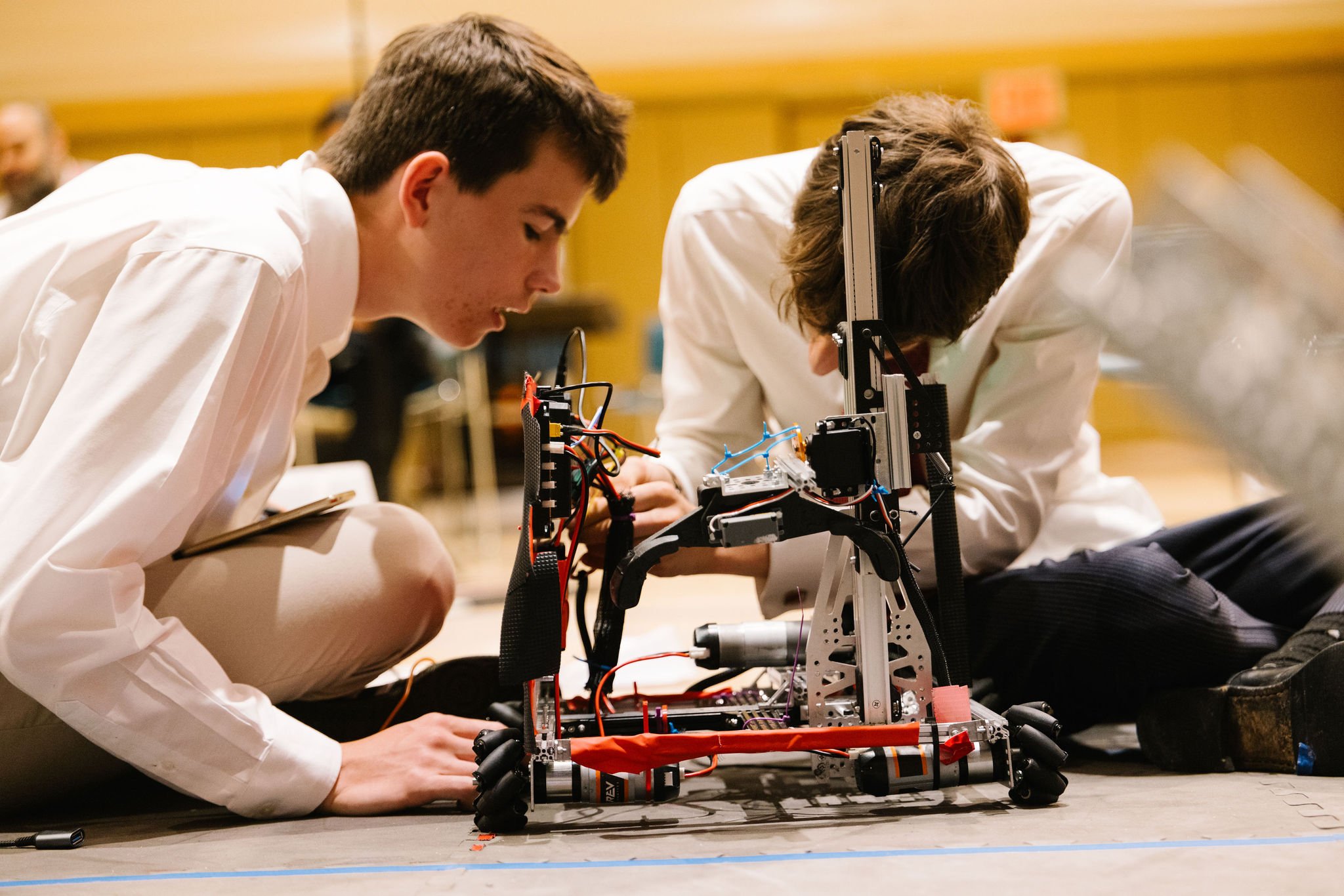
In Grade 10, introduction to engineering is designed to give students a basic understanding of the engineering-design process. Specifically, students will learn basic fabrication techniques and the use of fabrication tools such as CNC, laser cutter, 3D printer to learn the basics of the engineering design process equipped with the tool necessary to build larger engineering projects.

Grade 11 and 12 Advanced AI and CS

Advanced AI and Computer Science is a full-year, AP-eligible course that teaches the foundational principles of computer science through the lens of artificial intelligence, preparing students for the AP Computer Science Principles exam while developing practical, real-world AI fluency. Students progress from computing fundamentals and data literacy through algorithm design and programming, then advance into machine learning theory and the architecture of modern AI systems, including neural networks, CNNs, RNNs, and Generative Adversarial Networks, using Google Gemini as an integrated learning tool throughout. Prompt engineering, critical evaluation of AI outputs, and ethical reasoning are developed systematically across the year, ensuring students graduate as both technically capable and responsibly informed participants in an AI-driven world.

Grade 12 Data Science

This is an introductory college-level course where students learn to understand, ask questions of, and represent data through project-based units. The units will give students opportunities to explore data through active engagement, developing their understanding of data analysis, sampling, correlation/causation, bias and uncertainty, modeling with data, and making and evaluating data-based arguments, and the importance of data in society. At the end of the course, students will have a portfolio of data science work. The course will provide students with opportunities to understand the data science process asking questions, gathering and organizing data, modeling, analyzing and synthesizing, and communicating. Students will work through this process in a variety of contexts. Students learn through making sense of complex problems, then through an iterative process of formulation and reformulation coming to a reasoned argument for the choices they will make. Advanced AI and CS is a prerequisite/corequisite for this course.

Grade 12 Mechanical Engineering

Throughout this course, students will engage in the iterative engineering design process to develop, build, test, and refine solutions to real-world problems. Instruction emphasizes the application of engineering principles, the use of industry-standard design software, and hands-on experience with modern fabrication equipment. Students will focus on best practices in manufacturing, with a strong emphasis on safety, precision, and quality control. Creativity, problem-solving, and iterative improvement are central to all course activities. Advanced AI and CS is a prerequisite/corequisite for this course

Grade 12 Electrical Engineering

Throughout the course, students will engage in the iterative engineering design process with a focus on electronics and robotics systems. Students will design, build, test, and refine functional solutions to real-world problems using principles of electrical circuits, sensors, actuators, and embedded systems. Instruction emphasizes the use of industry-standard design and simulation software, and hands-on experience with microcontrollers, robotics components, and modern fabrication tools. Students will apply best practices in electrical safety, wiring and assembly, debugging, and quality control. Creativity, logical problem-solving, and iterative improvement are central to all course activities, preparing students for advanced study or careers in electronics, robotics, and engineering technology. Advanced AI and CS is a prerequisite/corequisite for this course.

Our Peer Leadership group is a team of Grade 12 students who meet weekly with Grade 9 students to discuss and advise them about the academic and social challenges and joys ahead of them. Peer Leaders are selected through a rigorous application process and are trained before student orientation in the fall. The Peer Leaders also meet regularly to discuss and learn about effective leadership, as well as to plan lessons for and reflect on their meetings with Grade 9 students. 

The Health and Wellness team consisting of two counselors, a health teacher, and a consulting psychologist provides faculty with strategies, book recommendations, and curricula to help students develop social and emotional skills. Lower School students participate in weekly health lessons for one semester of each year. In grades 1-3, the Health and Wellness program covers a variety of topics, including friendship, empathy, conflict resolution, mental wellbeing, hygiene, safety, decision making, body systems and nutrition. In grade 4, students also explore the physical, emotional, and social changes that happen during puberty.

Grade 9 Health & Wellness

The 9th Grade Health & Wellness is a year-long course that meets weekly to provide students with the knowledge, skills, and strategies necessary to build a strong foundation for lifelong wellness. Throughout the course, students will build essential life skills outlined in the National Health Education Standards, including decision making, goal setting, accessing reliable information, analyzing influences, advocating for self and others, and practicing effective communication. These skills will be integrated across four major units: Alcohol, Tobacco, and Drugs, Human Sexuality, Mental Health, Nutrition and Exercise.

Students will engage in real-life scenarios, interactive activities, discussions, and reflective practices that encourage them to take ownership of their health. The ultimate goal of this course is to equip students with practical tools and skills to make informed choices, foster healthy relationships, advocate for their well-being, and lead a balanced and fulfilling life.

Grade 10 Modern Masculinities

In this year-long course, boys will be asked to consider how masculinity is understood and performed as well as where those understandings come from and are lived. Through examining a variety of media and artifacts, students will critically examine the role culture plays in the lived experience of the various masculinities they encounter. They will enter into conversation with each other, ultimately developing their own understanding of what makes up healthy masculinity in the 21st century.

Grade 12 Modern Masculinities

In this semester course, boys will be asked to read and reflect on friendship and connection, as we see the growing trend of loneliness in men and boys in society. Through examining a variety of texts and media that reveal attitudes and messages they are exposed to relating to masculinity and friendship, students will explore their own experiences, attitudes, and aspirations towards adulthood as it relates to gender, friendship, and connection.

Grade 12 Health and Wellness

A semester long class that meets weekly with the seniors to cover many aspects of Wellness as they prepare for college. The overall goal of this course is to help prepare seniors for the transition from high school to college and life on campus. Topics include separation from family, home, friends and high school; STIs; contraception; sexual assault; consent; drugs and alcohol; mental and physical health. Class consists of presentations and discussions given by the students to a panel of staff from Browning.

Keeping in mind the values of curiosity, dignity, and purpose, Browning students are encouraged to seek and participate in opportunities for social impact. The school maintains relationships with various community-based organizations and offers regular volunteering events. The Green Team, in partnership with members of the Science faculty, leads a number of environmental and sustainability-related service projects as well as our annual celebration of Biodiversity Day. Additionally, boys lead fundraisers, food, clothing, and toy drives throughout the year, along with public awareness campaigns for important social issues. Much of this work is initiated by student councils, but any individual may bring an idea to the office of Social Impact. We are very proud that the service performed by the boys is entirely voluntary. Browning maintains a culture of giving in which boys understand their responsibilities to the communities that nurture them.

Senior Projects, our spring program for Grade 12 boys, requires a substantial volunteer for boys, which begins with the conclusion of academic classes for seniors in late May. Symbolically capping a Browning boy’s career, seniors volunteer with nonprofit organizations across the city including Make-A-Wish Foundation, Brooklyn Book Bodega, Grassroots Grocery. Students translate learned skills into real-world impact, reflecting their development in research, hands-on learning, planning, teamwork, and presentation.

The Physical Education staff promotes fitness and conditioning, stress-release activities, the advancement of teamwork and strategy, the relation of mind/body concepts, the importance of lifetime sports and fitness, and an awareness of outside professional sports and activities. Boys can participate in interscholastic sports or physical education classes in the Upper School

Grades 9

Physical Education in grade nine will prepare boys for various athletic activities and instruct them in fitness. Each class meeting, students will have the chance either to hone their skills in soccer, basketball and/or baseball, or to participate in weight training and cardiovascular exercise. Successful completion of this course will result in students having a working understanding of a variety of athletic skills and also the confidence to use the weight room effectively.

Grades 11 and 12

Basketball Skills Development

This course for juniors and seniors is meant to develop your basketball skills in order to be successful in organized games. It teaches the fundamental skills and rules of basketball, including dribbling, passing, shooting, and defending. The course may also cover team strategy and offensive and defensive plays in addition to conditioning.

Baseball Skills Development

The baseball skills development course intends to help juniors and seniors hone their skills in order to be successful in high level games. We teach the fundamental skills of baseball, including throwing, catching, hitting, fielding, and base running. We will also cover defensive tactics, team strategy, and conditioning.

Soccer Skills Development

Our soccer skill development course aims to teach the basic skills of soccer, such as dribbling, passing, and shooting to juniors and seniors. We may also cover rules, field positions, conditioning and tactical skills. It is meant to allow students the opportunity to prepare themselves to play in high level soccer games.

Weight Training

This weight training course will teach juniors and seniors how to safely and effectively lift weights, and how to use weight training to develop strength and fitness. The goal is for students to develop a lifelong love of physical fitness and be able to successfully implement their own workout plans in a safe and healthy manner.

Athletics

Browning recognizes the importance of athletics and athletic competition in the lives of boys and provides a number of team options each season. Dedicated to the moral and character development of their players, coaches strive to instill in each boy an abiding commitment to good sportsmanship coupled with a sense of responsibility both to himself and the team. Interscholastic team sports are open to students in Grades 7 through 12 in good academic standing.

The athletic department makes use of facilities both at school and within New York City. The soccer and baseball teams practice and play games at fields on Randall’s Island. The track team makes use of Van Cortland Park, Astoria Park and Central Park. In addition to the Upper and Lower gyms at school, the basketball teams take advantage of the gymnasium facilities at Club Equinox for practices and games. The tennis team plays a number of its matches at the National Tennis Center, in Flushing, Queens, and practices there as well.. Golf team practices are held at a virtual simulator close to the school and; matches are held at Mosholu Golf Course.

The Browning School competes inter-scholastically in the following sports:

Soccer: Varsity and Junior Varsity

Cross Country: Varsity

Basketball: Varsity and Junior Varsity

Squash: Varsity

Indoor Track: Varsity

Table Tennis: Varsity

Baseball: Varsity

Tennis: Varsity

Track: Varsity

Golf: Varsity

Connection, storytelling, constructive dialogue and studentship are the skills that help a Browning boy live a life of meaning through embodying our School’s values--curiosity, dignity, honesty, and purpose. In each of these courses, boys develop these skills and connect meaningfully with others using both reason and emotion. In tandem, these courses bring today’s boys to tomorrow’s men. 

Constructive Dialogue

Grade 9 Constructive Dialogue I

What does it mean for a dialogue to be constructive? In this Grade 9 course, students will learn the core tenets of constructive dialogue--let go of winning, get curious and ask questions, share stories, look for agreement, respond with purpose rather than react, and share the air. They will practice the dual skills of logical argumentation and empathetic listening--the foundation upon which every reasonable exchange of ideas must be built. Students will learn how to construct argument maps that support a claim with premises and sub-premises--building from arguments about trivial matters (sandwiches, pets, etc.) to those that define the most heated topics of our times (gun rights, immigration, etc.). Through this course, students will build the foundational skills necessary to engage productively in any conversation, no matter the weight of what is at stake.

Grade 10 Constructive Dialogue II: “High School Law Review”

Can 10th graders understand the complex issues involved in cases that come before the United States Supreme Court? Can they develop sophisticated arguments about those issues? In this course, students will do both those - and along the way they will hone the skills of close listening, ideological empathy, and agreeable disagreement in written and oral form. Drawing on materials provided by the High School Law Review program, tenth graders will learn how to read and interpret the United States Constitution with particular focus on the 1st, 2nd, 4th, 6th and 7th amendments. Then they will analyze and debate historical and contemporary Supreme Court cases involving freedom of the press, gun rights, campaign finance, capital punishment, rights of the accused, and freedom of religion among others. Interested students will be eligible to submit their writing for publishing consideration in the National High School Law Review. Achievement grades will be determined by mastery of case issues as demonstrated in writing and orally, commitment to small group work, and level of classroom engagement.

Storytelling

Storytelling I

Stories make our world go round, but how do we collect and implement the tools to tell great ones? In Storytelling I, all 9th grade students will engage the fundamentals of storytelling. From learning the structure and rhetorical elements, to practicing public speaking and sharing in community, students will focus on shorter, vignette styles. In each class, they will practice telling each other about their lives, their ambitions, and their experiences. They will reflect on their identity; how are they becoming the person they will be? They will see a wide range of examples of such stories, observing and discussing different models and topics.

Storytelling Capstone

This course will explore the art of oral storytelling as a means of personal expression, meaning-making, human connection, and community building. Students will learn to craft, revise, and perform true stories drawn from experiences in their own lives. Emphasis will be placed on strong public speaking fundamentals, narrative structure, audience engagement, and performance. Through a mix of in-class exercises, journaling, and developing a culture of observation and feedback, students will gain the skills and confidence to tell stories rooted in the same techniques used by all great storytellers—from Steven Spielberg to Steve Jobs.

The students’ work will culminate in a live storytelling showcase, where each student will present a polished story to the wider school community.

Library Research

Which skill allows a boy to stay organized and focused so he can express curiosity? Studentship is the skill of developing organizational techniques in order to be a boy’s best academic self.

Grades 10 Research Principles

The Research Principles Course is designed for grade 10 students and is a prerequisite for grade 11 Research, providing them with a unique opportunity to explore their interests while developing essential research and critical thinking skills. The course is structured into two semesters: the first semester focuses on introducing and reinforcing MLA format, providing students with the necessary skills for research and writing in the humanities. Collaboration with the history department allows for interdisciplinary projects that deepen understanding and relevance, while an emphasis on executive function skills promotes organization, time management, and self-regulation. The Upper School Browning library will serve as the central meeting point for this course, where students will engage in in-person activities that enhance their information literacy by learning to formulate research questions, conduct literature reviews, and analyze information effectively. The second semester emphasizes APA and Chicago styles to support and guide students in their Junior research projects in their selected field of interest.

Grades 11 Research Practicum

This Grade 11 Research Class offers students a unique opportunity to explore their interests while cultivating their research and critical thinking abilities. Students will actively engage in projects that align with their passions, facilitating the development of essential academic and research writing skills.

Research has the remarkable ability to invigorate subjects that may otherwise appear dry or uninteresting. By encouraging subject-specific exploration, we aim to ignite passion and purpose in our students. Through this mode of study, students can unlock their potential, discover new avenues of inquiry, and develop a deep sense of ownership over their learning experiences.

This course is designed to guide students through a comprehensive research process, emphasizing the key stages of introduction, reinforcement, and mastery of research skills. Students will have the unique opportunity to choose a focus for their research, allowing them to explore their interests. As part of the course, students will benefit from collaboration with research Institutions: where they will engage with renowned organizations such as the New York Historical Society and the New York Public Research Library to gather historical data and resources, while also partnering with Memorial Sloan Kettering for information on current scientific studies.

Music Classes

Grade 9 Music: Popular Music History, Theory and Practice

In this semester-long course, students explore popular music from the early 20th century to today. The course is performance-centered. Students spend the majority of class time actively making music, with a primary focus on guitar while incorporating other instruments based on prior experience and interest (bass, keyboard, drums, voice, etc.). Technical study includes chord vocabulary, rhythm reading, song form, improvisation, and ensemble skills. Students learn how popular music functions theoretically and structurally while applying these concepts in rehearsal and performance settings. Throughout the semester, students collaborate in ensembles, arrange songs, and deepen their understanding of the genre. Public performance opportunities are offered during the semester, which allows students to showcase their individual growth and collaborative musicianship.

Grade 10 Music: Guitar Ensemble

In this semester-long course, students study and perform classical guitar repertoire in an ensemble setting. Emphasis is placed on developing technique, musical expression, and collaborative performance skills through the study of specially arranged ensemble music. Students spend the majority of class time actively rehearsing and performing. Instruction focuses on posture, hand position and tone production in addition to reading standard notation. Students strengthen rhythmic accuracy, sight-reading skills, and dynamic control while learning to balance their individual sound within a group. Repertoire is selected to develop ensemble awareness, including part independence, listening across sections, and blending tone color. Public performance opportunities are offered during the semester, which allows students to showcase their individual growth and collaborative musicianship.

Grade 11 and 12 Music: Practice, Composition and Production

This project-based course is designed for students in Grades 11 and 12 who are interested in developing their skills as performers and producers. While this is offered as a full-credit course, a half-credit option is available for students who have scheduling conflicts. Students explore music creation from multiple perspectives including instrumental study, songwriting and audio/video production. No prior instrumental experience is required. Students may begin learning an instrument from scratch or continue developing existing skills. Class time is structured to support individualized practice goals while also incorporating collaborative projects and ensemble work. Emphasis is placed on technical growth, musical independence, and artistic voice. In addition, they are introduced to the recording process, including microphone technique, multi-track recording, editing, mixing, and basic production concepts. Throughout the semester students create music videos which cover a wide range of multimedia skills. Performance opportunities are offered during the semester, allowing students to present both original and arranged works in live settings. By the end of the course, students will have developed a portfolio of recorded and performed material that reflects their growth as musicians and creators.

Upper School Chorus

Chamber Choir is a small vocal ensemble class designed for juniors and seniors who enjoy singing and are ready to take their musicianship to the next level. In this collaborative setting, singers work closely together to develop strong tone, blend, balance, and expressive performance skills. Students perform a diverse range of repertoire, including classical choral works, spirituals, folk songs, contemporary pieces, and select modern arrangements. Emphasis is placed on healthy vocal technique, music literacy, confident part-singing and artistic expression. Because of the smaller ensemble size, each singer plays an important role in shaping the group’s sound. Students strengthen sight-reading skills, rhythmic accuracy, listening awareness, and ensemble communication. Rehearsals focus on teamwork, musical detail, and developing a unified, resonant sound. Performance opportunities are offered during the semester, allowing students to present both original and arranged works in live settings.

Chamber Choir

Chamber Choir is a small vocal ensemble class designed for juniors and seniors who enjoy singing and are ready to take their musicianship to the next level. In this collaborative setting, singers work closely together to develop strong tone, blend, balance, and expressive performance skills. Students perform a diverse range of repertoire, including classical choral works, spirituals, folk songs, contemporary pieces, and select modern arrangements. Emphasis is placed on healthy vocal technique, music literacy, confident part-singing and artistic expression. Because of the smaller ensemble size, each singer plays an important role in shaping the group’s sound. Students strengthen sight-reading skills, rhythmic accuracy, listening awareness, and ensemble communication. Rehearsals focus on teamwork, musical detail, and developing a unified, resonant sound. Performance opportunities are offered during the semester, allowing students to present both original and arranged works in live settings.

Ovation Orchestra

The Browning Ovation Orchestra is a yearlong ensemble open to all boys studying a musical instrument, with permission of the director. Boys study technique and work together to create a balanced ensemble sound. The repertoire ranges from classical to contemporary music and is rehearsed to performance level.

A Cappella ensemble - “A CaPanthers”

This is a yearlong ensemble for boys, by invitation from the choral director or by audition. Boys meet once a week with the director to rehearse the complex musical material - which requires superior musicianship and vocal ability - as well as performance choreography.

Upper School Rock Bande

The Upper School Rock Band is an ensemble open to boys who would like to play popular music in a group setting. The students meet twice a week and perform at a variety of school functions throughout the year. The music choices are usually student led. The director rehearses with the group to help achieve a polished performance.

Public Speaking & Drama

Grade 11 and 12 Acting Studio

Acting Studio will focus on reading, rehearsing, and performing scenes and monologues with the goal of becoming more well-rounded and compelling actors. The class will also incorporate exercises designed to help you dive more deeply into your authentic self and sharpen your technical abilities. We will take a generous period of time to explore and develop the material, which will be chosen from theater, film, and television. No previous acting experience required, but be prepared to challenge yourself.


Let’s Talk

We look forward to getting to know you and your boy.


Upper - Let's Talk (2).JPG